
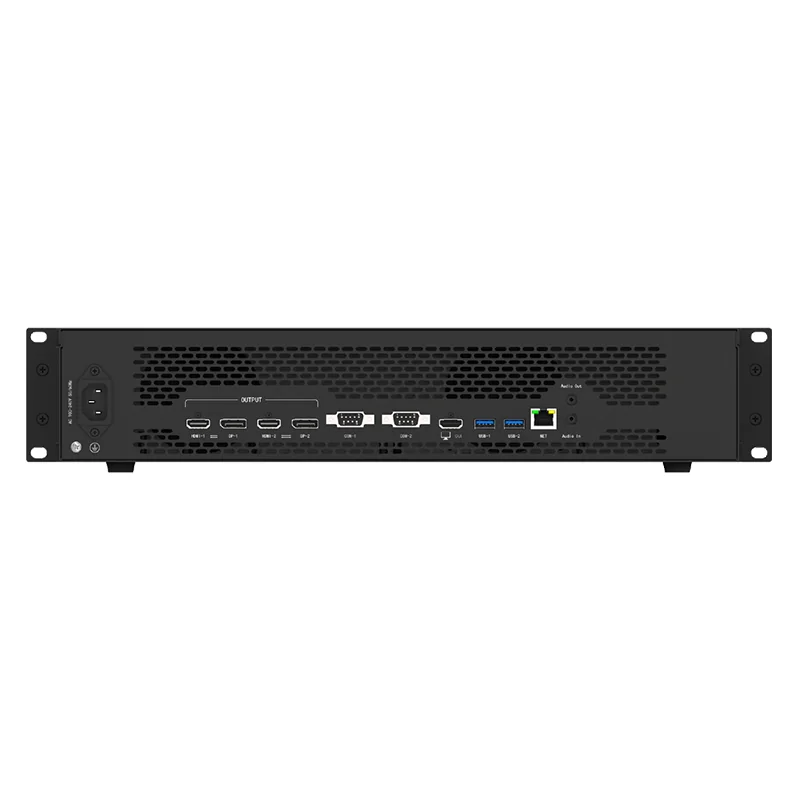
Modern LED display projects are no longer limited to showing simple video signals. From concert stages and broadcast studios to XR environments and immersive exhibitions, professional LED systems require precise content management, accurate synchronization, and stable operation. A key component that connects creative content with the final visual output is the Playback Media Server.
In a professional LED workflow, the system must handle high-resolution materials, multiple layers, unusual screen layouts, and real-time adjustments. Without a dedicated solution, operators may face problems such as delayed playback, incorrect mapping, unstable signals, or limited creative control.

A professional playback system is designed to bridge the gap between content production and LED display performance. It allows production teams to organize, process, and deliver visual materials efficiently while maintaining image quality across complex display environments.
Understanding Playback Media Server Functions in LED Display Workflows
A Playback Media Server works as the central engine responsible for preparing and delivering visual content to LED screens. Instead of sending a basic video signal, it manages the entire playback process, including content arrangement, resolution control, layer composition, and output synchronization.
In large-scale LED applications, the server receives prepared media files and transforms them into properly formatted signals that match the physical structure of the display. This is especially important for creative LED walls with curved designs, extended widths, irregular shapes, or multiple connected screens.
The main advantage of a dedicated playback media server is its ability to manage complex visual scenes. Operators can combine multiple video sources, graphics, animations, and live inputs into one coordinated output. This provides greater flexibility compared with traditional video playback devices.
For example, stage productions often use LED backgrounds that must change instantly according to performances. A media server allows operators to prepare timelines, organize scenes, and trigger visual effects accurately during live events. The Kommander series developed by Kystar integrates rendering and LED control functions to support reliable workflows for demanding applications.
How a Playback Media Server Improves Professional LED Control?
One of the most important roles of a playback media server is maintaining accurate content-to-screen matching. LED displays are often built with custom dimensions that do not follow standard television formats. The server must therefore support flexible pixel mapping to ensure every part of the image appears in the correct position.
In XR studios and virtual production environments, this capability becomes even more important. Large LED walls must display realistic backgrounds with precise timing and smooth movement. Any delay, distortion, or frame inconsistency can affect camera tracking and the final production quality.
Advanced systems also support multi-layer processing, allowing operators to combine different visual elements simultaneously. A presentation layer, background animation, live camera feed, and graphical effects can all be controlled within one workflow. This reduces equipment complexity and improves production efficiency.
Kystar provides LED control solutions through its Kommander platform, which supports high-resolution playback, multi-layer management, and pixel-level display control. These features help production teams create consistent visual results for stages, exhibitions, command centers, and other professional environments.
The Role of Synchronization and Reliability in LED Projects
Professional LED projects often involve multiple devices working together, including processors, sending systems, cameras, and additional display servers. If these systems are not synchronized properly, viewers may notice image tearing, timing errors, or inconsistent playback between screens.
A reliable workflow requires the media server to maintain accurate communication with other display components. Technologies such as frame synchronization and centralized management help ensure that large LED canvases operate as a unified visual surface.
For massive installations, scalability is another important consideration. Large venues may require multiple servers working together to create ultra-wide or high-resolution displays. The Kommander platform supports server cascading and synchronization technology to expand display capabilities while maintaining smooth image output.
Reliability is also critical because many LED applications operate during live events where failures are unacceptable. Backup systems, stable software environments, and professional hardware design help reduce operational risks and protect important productions.
Applications That Benefit From Professional Media Server Solutions
Different industries rely on advanced LED workflows because they need more than basic video playback. In entertainment, concerts and festivals use LED screens as dynamic visual environments that respond to music, lighting, and performance changes.
Broadcast studios and XR production facilities require precise image control because LED walls become part of the filming environment. Accurate color reproduction, low latency, and reliable synchronization directly influence production quality.
Corporate events, museums, retail spaces, and command centers also benefit from professional solutions. These projects often require scheduled content, multiple display zones, and long-term operation. A dedicated system provides better management compared with simple consumer playback equipment.
The Kommander product family includes solutions designed for different project requirements, from portable live events to large fixed installations. This allows Kystar to support various LED applications with scalable control options.
Conclusion
A professional Playback Media Server is an essential part of a modern LED display workflow because it controls how creative content becomes a high-quality visual experience. It manages complex playback tasks, improves screen accuracy, and provides the flexibility required for advanced LED applications.
For event producers, system integrators, and visual designers, choosing the right server is not only about playing videos. It is about achieving reliable performance, precise control, and seamless integration with the entire LED ecosystem.
As LED displays continue expanding into entertainment, commercial, and immersive environments, Kystar continues developing solutions that help professionals create stable and visually impressive experiences. A well-designed playback workflow allows every pixel to support the creative vision behind the project.
