
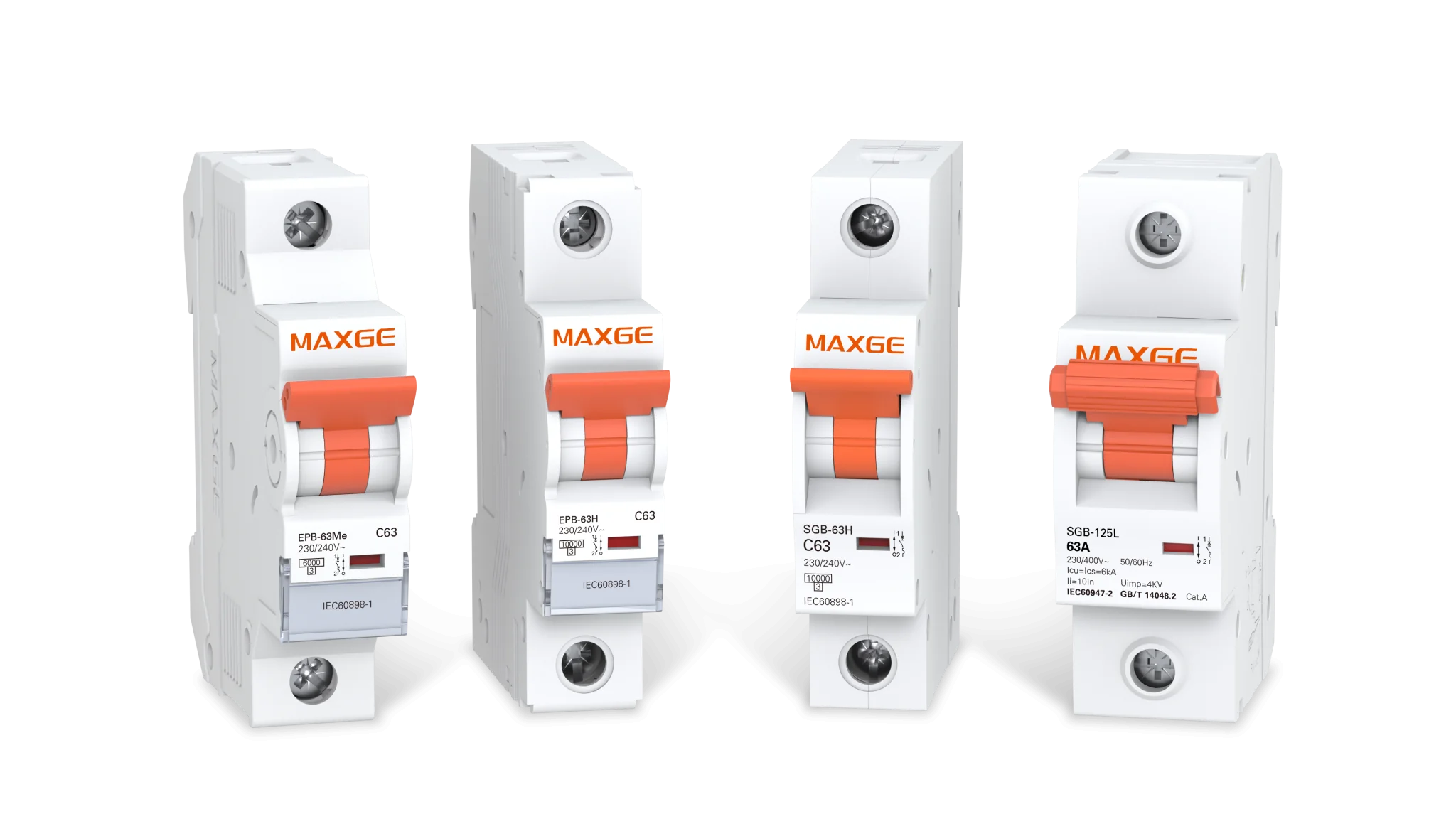
Choosing the correct circuit breaker rating is an essential step in designing and maintaining a safe low-voltage electrical system. Whether the application involves lighting, socket circuits, machinery, commercial facilities, or distribution equipment, the breaker must match the electrical characteristics of the circuit it protects.
Among modern electrical control products, the miniature circuit breaker is widely used for branch and terminal circuit protection. However, selecting a suitable model requires more than simply choosing a higher ampere rating. Rated current, system voltage, load characteristics, breaking capacity, conductor size, and installation conditions all need to be considered together.

What Does a Circuit Breaker Rating Mean?
The rated current of a miniature circuit breaker indicates the current that the device is designed to carry under specified operating conditions. Common ratings include 20A, 32A, 40A, 63A, and higher ratings for particular applications.
For example, a miniature circuit breaker 20-amp model may be suitable for a circuit with a relatively moderate electrical load, while a 32-amp miniature circuit breaker can accommodate a higher continuous current when the wiring and other system conditions are appropriately rated.
The rating should not simply be selected according to the maximum current that equipment can consume. The protective device must also protect the conductors. If the breaker rating is too high for the cable capacity, the breaker may not provide appropriate overload protection.
Is a Higher Amp Rating Always Better?
A common mistake when selecting a breaker is assuming that a higher current rating provides better protection. In practice, an oversized breaker can reduce the effectiveness of circuit protection.
Suppose a circuit is designed for a particular conductor size and expected operating current. Installing a substantially higher-rated breaker may allow excessive current to flow through the wiring before the protective device trips. The correct approach is to determine the expected load, verify conductor capacity, and then select a breaker rating that provides suitable protection.
This is particularly important when comparing different electrical control products. The most suitable product is not necessarily the one with the highest current rating, but the one whose specifications correspond to the complete electrical system.
Understanding a Miniature Circuit Breaker 20 Amp
A miniature circuit breaker 20-amp model is commonly considered for circuits where the expected operating current is above lower-rated branch circuits but remains within the capabilities of the connected wiring and equipment.
Before selecting a 20A breaker, users should calculate the expected load and consider whether the circuit contains continuous loads, motors, heating equipment, or other devices with particular starting characteristics. The rated voltage and breaking capacity should also correspond to the installation.
The physical configuration matters as well. Number of poles, terminal arrangement, mounting method, and compatibility with the distribution board can affect whether a particular MCB is appropriate.
When Is a 32-Amp Miniature Circuit Breaker Suitable?
A 32-amp miniature circuit breaker is designed for circuits that require a higher rated current than a typical 20A branch circuit. It may be considered for suitable power circuits and equipment applications where the conductor capacity and system design support a 32A protective device.
However, the presence of a 32A load does not automatically mean a 32A breaker is the correct choice. The actual load profile, cable characteristics, ambient temperature, installation method, and applicable electrical standards should all be reviewed.
The same principle applies when selecting other electrical control products. Product specifications should always be evaluated in relation to the complete installation rather than viewed as isolated numbers.
What About a 100 Amp Miniature Circuit Breaker?
The term “100-amp miniature circuit breaker” requires particular attention because higher-current applications may call for a different type of protective device rather than a conventional miniature circuit breaker.
At higher current levels, a molded case circuit breaker or another suitable protective device may provide the required electrical and mechanical characteristics. The choice depends on the system design, fault level, installation requirements, and applicable standards.
Therefore, users should not assume that every current rating belongs to the same breaker category. Checking the manufacturer’s technical documentation is an important step before selecting a product for a higher-current circuit.
Why Breaking Capacity Matters
Rated current is only one part of breaker selection. Breaking capacity is equally important because it relates to the fault current that the device can safely interrupt under specified conditions.
A circuit may operate normally at a relatively low current but still be exposed to a high prospective short-circuit current during a fault. The selected breaker must therefore have an appropriate breaking capacity for its installation location.
Voltage, frequency, number of poles, tripping characteristics, and applicable standards should also be reviewed. These specifications help determine whether the breaker is suitable for the intended electrical environment.
Selecting Electrical Control Products With Greater Confidence
For projects involving multiple circuits, consistent product selection and clear technical documentation can simplify installation, procurement, and maintenance. A suitable range of electrical control products should provide different current ratings and configurations so that users can match protection devices to actual circuit requirements.
MAXGE offers a range of circuit protection and electrical control products, including miniature circuit breakers and other low-voltage devices for different applications. Reviewing product specifications before purchasing can help users confirm ratings, dimensions, accessories, and application suitability.
Rather than selecting a breaker based solely on ampere rating, it is more practical to evaluate the load, conductors, fault conditions, system voltage, installation environment, and required protection together.
Make the Rating Match the Application
Selecting a circuit breaker is ultimately about establishing an appropriate relationship between the electrical load, system conditions, and protection device. A 20-amp miniature circuit breaker, a 32-amp miniature circuit breaker, or a higher-rated device may serve different applications when the rated current and protection characteristics are properly matched to the circuit.
Beyond rated current, factors such as breaking capacity, tripping characteristics, installation environment, and coordination with other protective devices can influence the selection. MAXGE provides a broad low-voltage electrical product range to address different protection and control requirements, including applications in conventional electrical systems as well as PV, energy storage, renewable energy, and EV charging.
With manufacturing bases in Deqing and Wuhu and more than 90% automation across its production processes, MAXGE combines manufacturing capabilities with R&D resources, patented technologies, software copyrights, CNAS-related laboratory capabilities, and international certifications. Its MAXGE, EMA, and GEBLER brand portfolio supports customers across more than 60 countries through over 80 distribution partners. For product specifications or application-related questions, you can contact MAXGE through its official website.
