
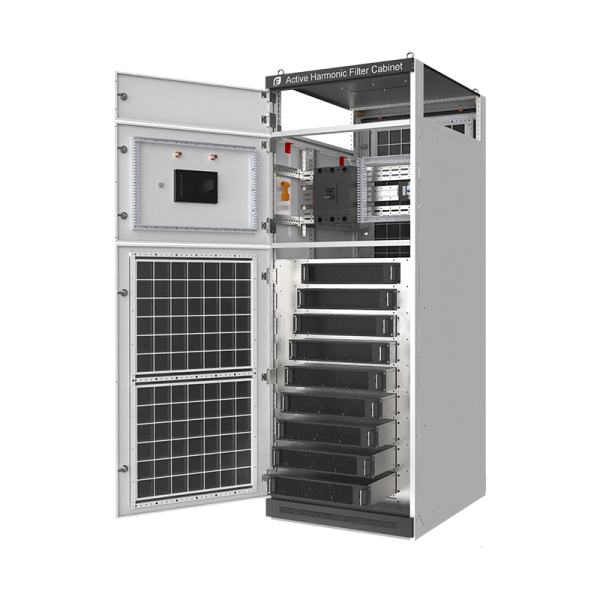
Non-linear electrical loads such as variable frequency drives, uninterruptible power supplies, and switched-mode power conversion units introduce non-sinusoidal current draw into modern distribution systems. High harmonic distortion increases thermal stress on power transformers, causes premature capacitor degradation, and generates phase voltage unbalances across facility switchgear. Engineering teams seeking the best load balancing and power quality solutions for large buildings routinely perform power audits to capture total harmonic distortion parameters before applying targeted correction hardware.
Focusing on heavy-duty power electronics, Enjoypowers engineers power conditioning equipment tailored for demanding commercial and industrial facilities. Powered by independent research and development, custom mechanical design capabilities, proven operational stability, and responsive global field support, the company provides comprehensive technical consultation. Plant engineers and facilities managers can reach out directly to request tailored power quality evaluations and detailed project proposals.

Mitigating Electrical Noise in Critical Infrastructure
Systematic harmonic filtering prevents voltage waveform degradation from disrupting sensitive control automation and communication equipment. Integrating Hybrid Reactive Power Compensation combines active switching circuits with passive capacitor banks, providing dynamic power factor correction while damping dynamic resonance risks.
Modular filter architectures allow electrical planners to scale power quality correction incrementally as site load capacity grows. Stabilizing busbar voltage preserves operational efficiency across dense electrical networks.
Operational Drivers of Harmonic Distortion in Large Facilities
Modern facility architecture relies heavily on solid-state electronics to reduce overall energy consumption. However, phase-controlled rectifiers and non-linear power supplies pull current in brief pulses, creating odd-order harmonic currents that propagate back into local switchgear.
Excessive harmonic current circulating through neutral conductors produces phase overheating and neutral-to-ground voltage elevation. Mitigating current harmonics at the distribution branch protects upstream electrical assets from cumulative thermal stress.
Advanced Filtering Topologies for Sensitive Electronic Loads
Data center power distribution networks require ultra-fast mitigation of transient voltage disturbances to keep server power supplies operating within nominal limits. Modern active harmonic filtering hardware achieves a 5 ms response time to correct high-frequency current spikes, targeting total current harmonic distortion levels below 5% (THDi < 5%) while supporting flexible N+1 redundancy configurations.
High-speed digital signal processors measure load currents continuously, injecting equal opposing harmonic waveforms within milliseconds. Rapid current compensation stabilizes power distribution units and prevents unexpected thermal tripping of circuit breakers.
Dynamically Balancing Phase Loads and Power Factor Imbalances
Single-phase office IT loads, server cabinets, and localized HVAC equipment frequently introduce severe load unbalance across three-phase commercial distribution networks. Implementing the best load balancing and power quality solutions for large buildings redistributes active current between phases while neutralizing zero-sequence current in the neutral line.
Dynamic phase rebalancing lowers neutral current levels, preventing neutral bus overheating and reducing copper line losses. Industrial facilities maintain balanced phase voltages, which protects three-phase electric motors from excessive thermal buildup.
Deployment Strategies for Data Centers and Colocation Assets
Mission-critical colocation facilities operate under strict power quality SLAs requiring smooth voltage waveforms at all distribution buses. Implementing Hybrid Reactive Power Compensation helps facility operators maintain unity power factor without over-compensating during light IT load periods.
Automated step control allows system controllers to switch passive capacitor steps for steady-state reactive loads while active filters handle fast transient swings. Combining these functions minimizes overall capital expenditure while keeping voltage distortion low.
Combining Passive Capacitors and Active Compensation Technologies
Traditional capacitor banks supply low-cost reactive power compensation but cannot adapt to rapid load variations or filter dynamic harmonics. Hardware developed by Enjoypowers integrates advanced digital control algorithms to coordinate passive steps with active switching modules for continuous, stepless reactive power adjustment.
Active compensation can help address harmonic and reactive power issues associated with rapidly changing industrial loads. Facility operators achieve stable power factor correction under rapidly fluctuating industrial load conditions.
Technical Criteria for Selecting Facility Power Filtering Hardware
Evaluating power quality equipment requires evaluating thermal management, modular serviceability, and harmonic attenuation capability. Facilities evaluating the best load balancing and power quality solutions for large buildings prioritize modular hot-swappable designs to simplify ongoing routine maintenance without de-energizing main buses.
Compact physical enclosures lower physical footprint requirements inside crowded switchgear rooms. High-density power modules enable straightforward capacity expansion as facility electrical infrastructure expands over time.
Long-Term Monitoring and System Integration for Facility Stability
Modern active filtering hardware communicates with central building management systems via standard open fieldbus protocols. Modern Hybrid Reactive Power Compensation hardware streams real-time voltage, current, and harmonic data directly to plant energy management software.
Continuous waveform logging allows facility maintenance teams to identify emerging power quality anomalies before equipment failures happen. Automated alerts support predictive maintenance strategies across commercial and industrial facilities.
Conclusion
Resolving harmonic distortion and phase unbalance requires robust power electronics and flexible compensation topologies. Utilizing hardware solutions from Enjoypowers provides dependable power conditioning backed by dedicated internal R&D, flexible product customization options, demonstrated field stability, and global service support. Project developers, engineering procurement teams, and facility managers are invited to contact technical support specialists to discover optimized power quality solutions for upcoming installation projects.
