
Frequent product changes can make a fabrication workshop difficult to schedule, particularly when orders involve different sheet dimensions, metal grades, thicknesses, and intricate geometries. Production efficiency depends not simply on cutting speed but on how reliably equipment transitions between jobs without excessive setup time or inconsistent results.
A sheet laser cutting machine should be assessed against the actual mix of parts moving through the workshop, including the frequency of material changes and the repeatability required across small batches. This broader view helps manufacturers balance flexibility, machine utilization, and finished-part quality without investing in capabilities that their production mix rarely needs.

Matching Sheet Size to the Real Production Mix
Sheet dimensions influence machine selection long before the first cutting program is created. A workshop processing compact brackets and control-panel components may prioritize rapid loading and efficient use of floor space, whereas manufacturers handling large enclosures or architectural panels need a working area suited to longer and wider blanks. Oversized capacity can increase equipment and facility costs, while a bed that is too small may force additional segmentation, repositioning, or alternative processing steps.
Part dimensions alone do not describe the full requirement. Nesting layouts, edge margins, skeleton removal, loading access, and the space needed for unloading finished parts all affect practical sheet utilization. Production planners should examine representative jobs rather than relying on the largest sheet listed in a catalogue. Reviewing order history can reveal the proportion of work handled by common sheet sizes and show whether occasional oversized orders justify a larger machine or a different production arrangement.
A sheet metal laser cutting machine also needs to accommodate the physical characteristics of the sheets being processed. Thin blanks may flex during handling, while larger panels can be difficult to position consistently if support and loading arrangements are poorly matched to their dimensions. Table design, material-handling equipment, and operator access should therefore be assessed alongside nominal cutting capacity. The objective is to make the full workflow practical, not merely to fit the largest sheet onto the cutting bed.
Evaluating Material Variety and Thickness Changes
High-mix fabrication often involves mild steel, stainless steel, aluminium, and other metals with different optical, thermal, and mechanical characteristics. Each material responds differently to laser energy and assist-gas conditions, so a process recipe developed for one grade may not transfer directly to another. Reflectivity, thermal conductivity, surface condition, and thickness can all influence cutting behavior. The required material range should be defined from actual orders, with particular attention to the combinations that account for most production hours.
Thickness changes add another layer of complexity. Increasing thickness generally changes the required process window, including laser power, feed rate, focus position, and assist-gas settings. A machine capable of cutting a broad thickness range may still require careful recipe development to maintain edge quality and dimensional accuracy across that range. Before purchase, manufacturers should request sample cuts using representative grades and thicknesses, then evaluate burr formation, kerf consistency, heat-affected areas, and the amount of secondary finishing required.
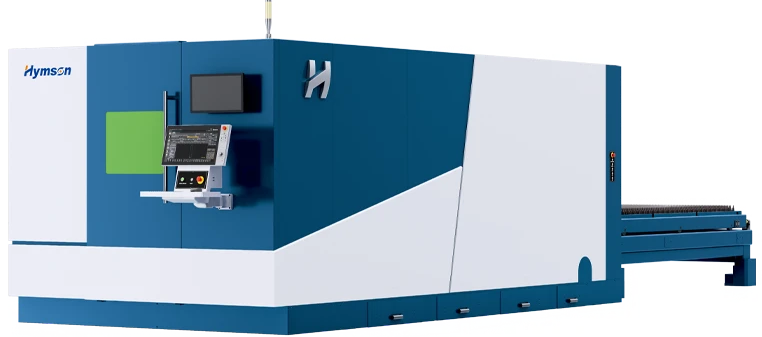
Hymson Laser Machinery features the HyLaser PRO within its product portfolio. Its suitability for a particular high-mix workshop should be evaluated against the manufacturer’s published specifications and demonstrated performance for the intended materials, sheet sizes, and thicknesses. Rather than relying on a general claim of versatility, buyers can request a structured cutting trial covering several real production jobs. Results from that trial provide a clearer basis for comparing process stability, edge quality, and changeover requirements under realistic conditions.
Reducing Changeover Time Without Sacrificing Repeatability
In high-mix production, setup time can consume a significant share of the available shift. Operators may need to load a new material, select a different cutting program, adjust process parameters, verify the sheet position, and confirm that the first part meets the drawing. If these steps depend heavily on individual experience, results can vary between shifts. Standardized recipes, clear program identification, and documented setup checks make job transitions more predictable while reducing dependence on informal knowledge.
Automation can support repeatability when it addresses the sources of variation that matter most. Consistent sheet positioning, suitable sensing functions, and controlled parameter management help reduce differences between successive batches. However, automated features should be evaluated in relation to the workshop’s actual operating sequence. A facility that changes material every few minutes may value quick program retrieval and efficient loading more than an advanced feature designed for occasional large production runs.
Balancing Flexibility, Utilization, and Operating Cost
A high-mix environment rarely benefits from evaluating machine performance through a single metric. Maximum cutting speed may matter for recurring large batches, but frequent short runs also incur programming, loading, unloading, and inspection time. A useful comparison estimates total production time across representative orders, including setup and finishing. Such an assessment can reveal why a machine with a higher headline speed does not necessarily deliver more accepted parts during a typical shift.
Operating costs also extend beyond the purchase price. Energy consumption, consumables, maintenance access, replacement components, operator training, and software integration can influence the cost of each finished part. Material utilization deserves equal attention because inefficient nesting or repeated setup errors may generate substantial waste across numerous small orders. Buyers should compare these factors using similar production assumptions and include the expected service workload rather than relying solely on advertised performance figures.
Long-term flexibility depends on whether the machine can accommodate plausible changes in product demand. A workshop moving toward more aluminium components, thinner sheet, or more complex contours may require different process capabilities from one focused on thick steel structures. Reviewing the order portfolio with production and engineering teams helps distinguish genuine future requirements from speculative upgrades. Equipment selection becomes more defensible when capacity, material range, and automation are tied to measurable production needs.
