
Modern oral care is no longer limited to a toothbrush, toothpaste, and string floss. Brands now have access to powered brushes, water flossers, and interdental devices. When building an oral care solution, the goal should not be adding technology for its own sake. The right portfolio should solve practical cleaning needs.
- Start With the User’s Core Oral-Care Needs
Any oral care solution should begin with the fundamentals of daily oral hygiene. The American Dental Association recommends brushing twice a day with fluoride toothpaste and cleaning between teeth once a day. Interdental cleaning helps remove plaque and debris from areas toothbrush bristles cannot clean effectively.

Brands should identify which part of the routine their product improves. A device may focus on interdental cleaning, gumline care, brushing convenience, portability, or accessibility. Defining that purpose clearly helps prevent overlapping products and gives consumers a simpler reason to choose one format.
- Consider Different Interdental Cleaning Preferences
Traditional string floss remains useful, but not every consumer finds it easy to handle. The National Institute of Dental and Craniofacial Research lists water flossers, floss holders, floss threaders, and interdental brushes as alternatives for cleaning between teeth. Dexterity, interdental spacing, dental appliances, and personal preference can influence the method.
A dental water flosser uses a stream of water to clean between teeth and around the gumline. For brands, this creates an opportunity to offer an interdental product that differs from string floss in operation and user experience. The emphasis should remain on documented function rather than unsupported medical claims.
- Balance Features With Practical Usability
Adding more settings does not automatically create a better product. Brands should assess pressure control, operating modes, tank size, nozzle options, charging, battery performance, grip, noise, and waterproofing according to the intended market. A travel product may prioritize compactness, while a countertop unit may prioritize capacity and broader functionality.
Ease of cleaning is equally important. Water-contact components require clear maintenance instructions, and users need to understand how to clean, store, and replace relevant parts. A well-designed product should make everyday use straightforward rather than adding complexity.
- Build Around a Cohesive Product Portfolio
Brands should consider how each product fits with the rest of their range. A dental water flosser can complement toothbrushes and traditional interdental products instead of being positioned as a universal replacement. A portfolio may also include handheld and countertop formats, allowing the brand to address different spaces, routines, and price points.
This portfolio approach can also support clearer merchandising. Products can be grouped by portability, tank capacity, operating modes, or user scenario. Such organization gives distributors and retailers practical ways to explain differences and helps consumers select based on actual needs.
- Check Technical and Compliance Requirements
For B2B buyers, product selection goes beyond consumer-facing features. Brands should review electrical requirements, waterproofing claims, materials, charging systems, packaging, labeling, testing, and market-specific regulatory expectations. Supplier documentation should be consistent with the specifications presented in product pages and marketing materials.
Quality systems are another consideration. A supplier with structured R&D, testing, and production processes can make development more predictable. Brands should also confirm available customization, including industrial design, packaging, accessories, control features, and the process from concept to mass production.
- How Flycat Supports Oral Care Development
Flycat positions their business as an OEM/ODM manufacturer specializing in oral care products. Their official portfolio includes handheld, portable, and countertop water flossers, alongside other oral-care categories. They state that their services cover product development through mass production and delivery, which can help brands seeking one manufacturing partner for a broader oral care solution portfolio.
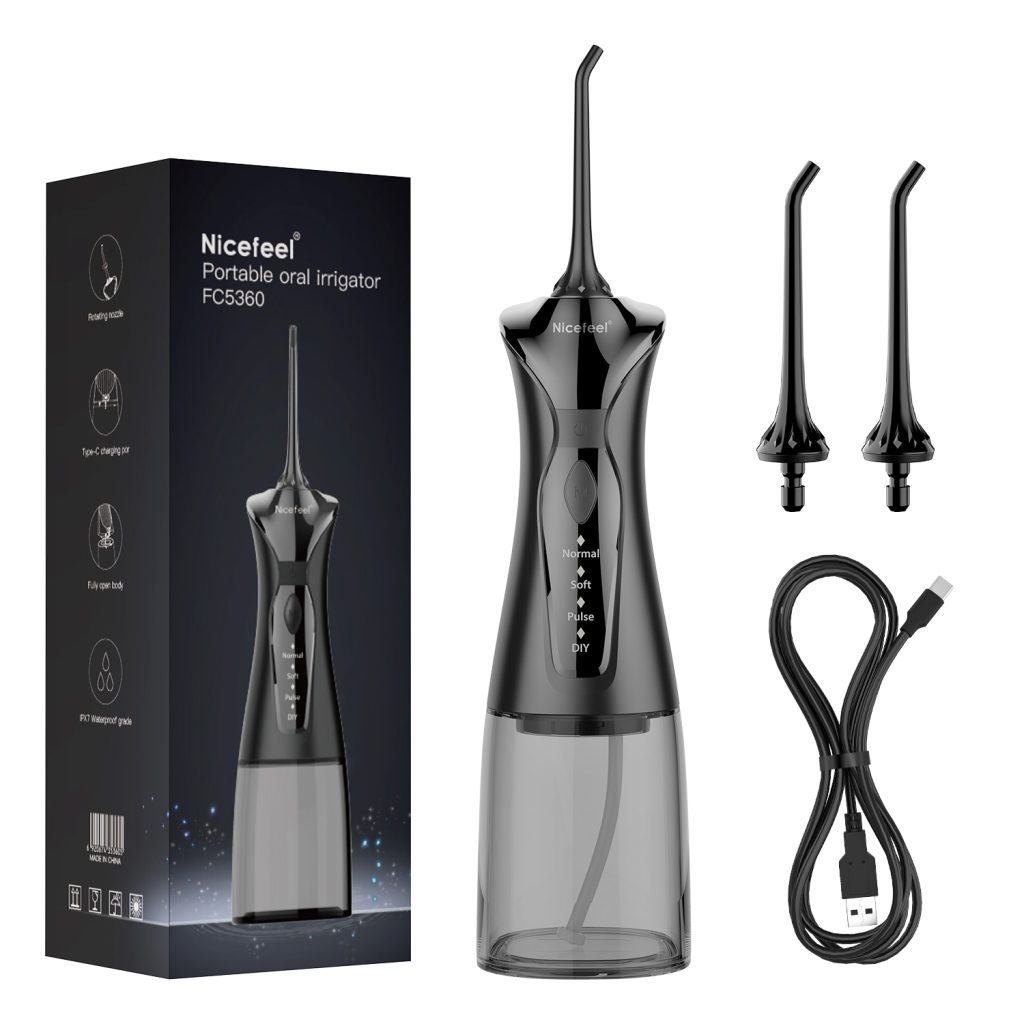
Their FC5360 smart water flosser is listed with a 300 mL water tank, four working modes, a pressure range of 20–130 psi, a 1,500 mAh battery, and IPX7 waterproof protection. These specifications provide a concrete example of how adjustable settings, capacity, battery power, and water resistance can be combined in a modern product.
- Evaluate Manufacturing Scale and R&D Support
Flycat states that they operate a manufacturing facility covering more than 20,000 square meters, with 30 production lines and a daily capacity of up to 30,000 units. They also report more than 40 R&D engineers and over 400 patents. For growing brands, such resources can be relevant when evaluating whether a supplier can support development, customization, and larger production programs.
They also state that they are certified to ISO 9001 and ISO 13485 standards, while their products comply with certifications and requirements including CE, FDA, RoHS, and UL. Buyers should still verify the specific compliance documentation required for their target markets and individual products before commercialization.
- Turn Product Selection Into a Long-Term Oral Care Solution
A successful oral care solution should connect consumer needs, product usability, technical performance, compliance, and manufacturing capability. Instead of selecting features in isolation, brands can define the cleaning problem first and then choose the appropriate product format, specifications, and supporting portfolio.
Flycat combines oral-care R&D with large-scale manufacturing and OEM/ODM services. Their water-flosser portfolio gives brands multiple form factors to evaluate, while their customization capabilities can support different market strategies. For companies developing modern oral-care products, working with a supplier that can connect design, engineering, quality control, and production can simplify the path from concept to finished product.
