
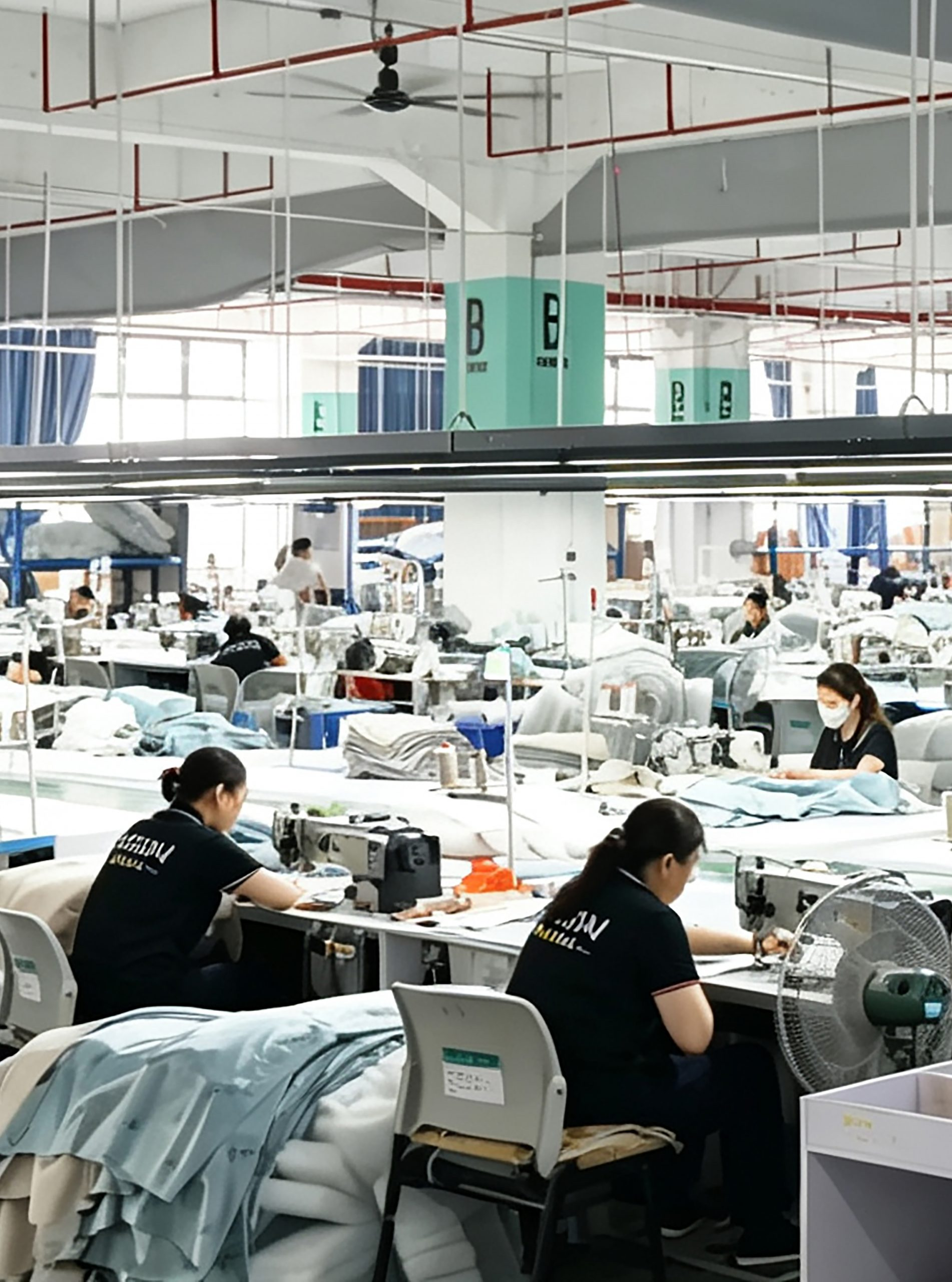
A mattress arrives as one finished product, but its production depends on separate streams of springs, foam, fabric, design work, assembly, packaging, and freight. Coordinating those streams becomes harder when a business sources across borders. The appeal of Chinese mattress manufacturing is partly the concentration of related suppliers and production skills in furniture regions.
That concentration can shorten some handoffs and expand the range of products available to an importer. Specifications, quality evidence, and contractual responsibilities still require checks after identifying a sourcing region. Understanding the reason businesses work with these factories starts with the supply system around the mattress, not a claim that every factory offers the same result.

The Value of a Connected Production Region
Furniture manufacturing centers bring component suppliers, technical workers, packaging providers, and exporters into closer contact. A change to a fabric or spring unit may be easier to discuss where the relevant production partners already operate. Shared infrastructure also gives buyers access to different construction methods and supporting furniture categories. These advantages are most useful when a factory can coordinate the participants and keep the approved specification intact as materials move between them.
Foshan is one such furniture production center. Suisin Furniture says it is based there and combines design, R&D, production, sales, and service in one supply system. Its range covers mattresses, beds, sofas, and matching furniture.
For an importer planning a bedroom assortment, that breadth can reduce the number of separate conversations needed to explore related products. The connection is conditional, however: product compatibility, acceptable quality, and a lead-time plan still have to be established for each item. Geography can support coordination; it cannot replace it.
Development and Manufacturing Can Be Linked
Businesses often need more than a standard mattress with a different label. A hotel may require a specific dimension, while a retail brand may need a construction suited to a defined price and comfort position.
Development work becomes valuable when those requests are translated into materials, drawings, samples, and repeatable production instructions. A mattress manufacturer that participates in both design and factory execution may have fewer gaps between a buyer’s concept and the version that reaches the production line.
The company reports a 200,000-square-meter production base and OEM and ODM capabilities for international projects. It also cites product development resources and quality management. These are reasons to examine its ability to handle customized work, not evidence that any proposed variation has already been validated.
A business still needs to agree on the sample, permitted substitutions, dimensions, labeling, and inspection criteria. Both parties need one documented mattress version before factory capabilities can be tested against the exact work required by the order.
Integrated development can also simplify revisions after a trial. If a distributor finds that a cover fabric is unsuitable for its market, the change affects more than appearance. It may alter material procurement, quilting, labeling, or packing. A clear revision process connects the buyer’s feedback with a new approved specification before another production run begins. Without it, the same model name can conceal a meaningful product difference.
Export Experience Addresses a Different Set of Tasks
Making a product and delivering it internationally are related but distinct responsibilities. Packaging must protect the mattress and fit the planned transport method. Documents, labels, and shipment timing must align with the importing business’s requirements. A factory familiar with export work can participate in these decisions earlier, when a packaging change is still feasible. Businesses working with mattress manufacturers in China therefore assess export support alongside construction and quality rather than treating freight as an afterthought.
Suisin Furniture states that its products reach more than 60 countries and that export support is part of its operation. Export experience supplies a starting point for cross-border sourcing; the destination rules and shipment plan still have to be checked for this order.
Export history does not automatically resolve local compliance, installation needs, or the condition of a mattress after a long journey. The practical benefit lies in identifying those requirements before production and assigning responsibility for each one.
Concentrated supply chains and integrated factories can offer a business variety, development capacity, and a single point of coordination across its entire international purchasing cycle. They can also hide weak links if a buyer relies only on scale or location.
A sample can reveal how a proposed material combination feels; written specifications make it possible to compare later units with that sample. Production and pre-shipment checks then show whether the factory has maintained the intended construction. The buyer’s own forecast and communication practices matter as well, because unstable requirements make consistent output harder for any manufacturer.
Businesses work with mattress manufacturers in China when these conditions match their sourcing goals. A mattress manufacturer may be attractive for its product range, customization, or export experience, while a mattress supplier may also coordinate several stages of procurement and delivery. The strongest reason for cooperation is neither a factory address nor a large production figure on its own. It is the demonstrated ability to turn a defined product requirement into repeatable goods and an agreed international shipment.
