
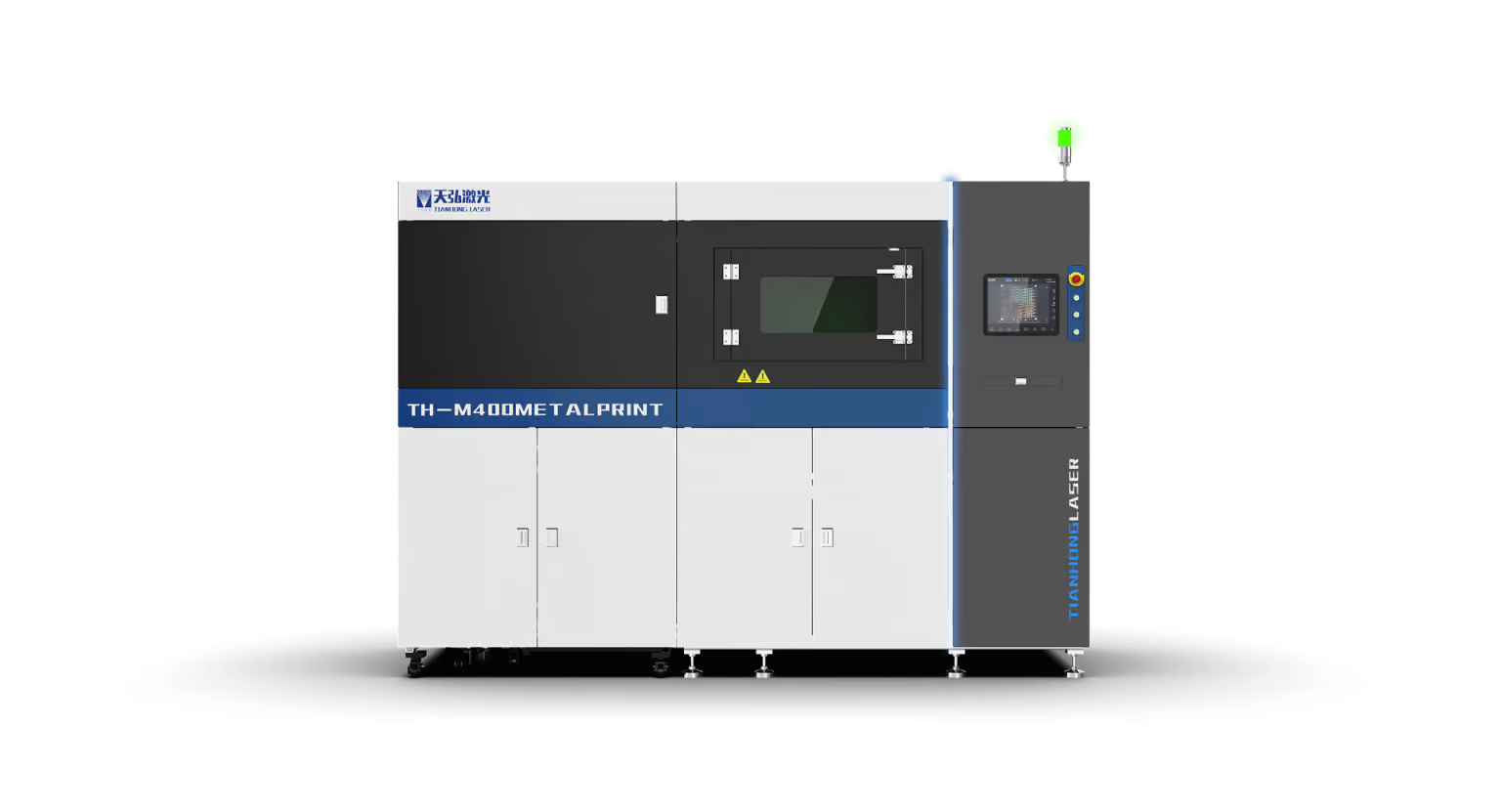
Complex metal components often expose the limitations of conventional manufacturing. Deep internal channels, lattice structures, lightweight forms, integrated assemblies, and customized parts can require multiple machining operations, special tooling, or complicated assembly. Metal additive manufacturing changes this approach by building components layer by layer from digital data. For manufacturers evaluating a metal 3D printer, the technology can provide greater design freedom while reducing some process constraints associated with subtractive and conventional methods.
Why Complex Metal Geometries Are Difficult to Manufacture

Traditional processes are highly capable, but their tooling and access requirements can restrict certain designs. Machining, for example, needs suitable tool access to remove material from a workpiece. Internal passages, undercuts, and enclosed structures can therefore become difficult or expensive to produce.
Metal additive manufacturing addresses these constraints by creating geometry directly from a digital model. Instead of relying on cutting tools to reach every feature, a metal 3D printer selectively melts metal powder layer by layer. This approach can support geometries that would otherwise require multiple manufacturing steps or separate components.
Design Freedom for Internal Channels and Lattices
One major advantage of metal additive manufacturing is its ability to produce internal features. Heat exchangers, cooling structures, conformal channels, and lattice designs can be incorporated into a component rather than added through conventional assembly.
LiMN 3D identifies heat exchangers, aerospace components, mold manufacturing, automotive parts, and medical and dental products among its application areas. Its published examples include cooling lattices, heat sinks, impellers, accompanying waterways, and complex mold structures. These applications demonstrate where geometric freedom can become a practical engineering advantage.
A metal 3D printer can also enable topology-optimized or lightweight designs. Engineers can remove material from areas where it contributes less to performance while retaining material around critical load paths. For aerospace and automotive applications, this design strategy can support efforts to reduce part weight and consolidate components.
Improving Accuracy Through Controlled Printing
Design freedom alone is not sufficient for industrial production. Complex geometries must also be produced with controlled positioning and repeatable layer deposition. Machine architecture, powder spreading, scanning, motion control, and software can all influence the resulting part.
The LiMN 3D LM-M150 uses metal powder bed melting technology and incorporates a servo-driven scanner and powder spreader for high accuracy. Its Z-axis uses a high-precision grating ruler with ±0.01 mm repeatability, while a proprietary correction algorithm is designed to improve printing accuracy.
The LM-M150 is listed with dimensions of 960 × 760 × 1788 mm and a layer thickness range of 20–120 μm. Its published power specification is 380 V, 34 kW. These specifications should be assessed alongside the intended part size, material strategy, throughput requirements, and facility conditions before procurement.
Maintaining a Stable Powder Bed Environment
Consistent process conditions are particularly important when producing complicated structures. Variations in airflow or powder behavior can affect the printing environment and potentially influence surface quality and process stability.
The LM-M150 features a professionally designed and verified airflow system intended to provide a uniform wind field, clean surfaces, and consistent spark performance. It also uses an independent circulation filtration system with durable filter elements, which LiMN 3D states can reduce filter replacement frequency.
Connecting Digital Design With Production
Complex geometries also create challenges before the printing stage. A sophisticated CAD model must be prepared correctly, converted into printable data, and managed through the machine’s control workflow. A complicated production process can reduce some of the efficiency gained through design freedom.
The LM-M150 uses TH3D control software to manage the control process from data through part processing and forming. According to LiMN 3D, operators can complete printing tasks by following the operating instructions. For businesses adopting metal additive manufacturing, a straightforward digital workflow can help reduce operational complexity and support more consistent machine use.
Where Complex Geometry Creates Business Value
The commercial value of a metal 3D printer depends on whether design freedom solves a real production problem. Aerospace manufacturers may use complex geometries to combine lightweight structures with functional performance. Automotive companies can explore integrated components and optimized cooling structures. Mold manufacturers can incorporate complex cooling channels that are difficult to achieve through conventional approaches.
Medical and dental production can also benefit from customized geometries. LiMN 3D lists dental structures such as crowns, bridges, partial dentures, and oral stents among relevant applications, while its broader portfolio addresses healthcare, aerospace, precision engineering, and mold manufacturing.
Evaluating a Metal 3D Printer for Complex Parts
Manufacturers should evaluate more than maximum build speed when selecting equipment. Key considerations include layer thickness, machine accuracy, scanning and powder-spreading systems, software workflow, filtration, build dimensions, power requirements, material compatibility, and technical support.
LiMN 3D positions itself as an SLM metal additive manufacturing equipment provider and offers products ranging from compact systems to larger industrial platforms. Its website also lists requirement analysis, prototype development, training and support, installation and maintenance as supporting services. This end-to-end approach can be relevant for businesses developing new applications rather than simply purchasing a machine.
Turning Geometric Complexity Into a Manufacturing Opportunity
Complex metal geometries do not automatically make additive manufacturing the best solution, but they can reveal where the technology delivers its strongest advantages. By building parts directly from digital designs, metal additive manufacturing can reduce certain tooling constraints and enable internal channels, lattices, lightweight structures, and consolidated components.
For manufacturers considering a metal 3D printer, the LiMN 3D LM-M150 provides a concrete example of how machine accuracy, controlled powder-bed conditions, scanning technology, and digital workflow can work together. Careful evaluation of the component, production volume, material, and process requirements remains essential, but the technology offers a practical route for turning difficult geometries into manufacturable metal parts.
