
Table of Contents
In rodent motor function studies, a few seconds of difference in fall latency can affect how researchers interpret coordination ability, fatigue resistance, or treatment response. However, these differences are meaningful only when testing conditions remain consistent. Rotation speed, acceleration mode, training schedule, and fatigue endpoints all influence rotarod performance data. For laboratories conducting neuroscience, behavioral, or pharmacological studies, selecting the right protocol and testing system is essential. BioMed Easy provides life science instruments and software solutions that support animal behavior and motor function research.
Establish the Research Objective Before Developing a RotaRod Protocol
Before starting a rotarod experiment, researchers should define the specific motor function characteristics they want to evaluate. Different research objectives require different protocol designs, and standardized procedures help improve the reliability of experimental results.
In neuroscience studies, rotarod testing is commonly used to evaluate motor coordination, balance ability, and movement impairment in animal models. For example, researchers studying neurological disorders may use performance changes to analyze disease progression or treatment effects.
In pharmacological research, rotarod tests can help determine whether compounds influence motor ability or recovery processes. Exercise-related studies may focus more on endurance capacity and fatigue resistance.

A clear research objective helps determine suitable parameters, including rotation speed, acceleration pattern, test duration, and evaluation criteria. Without proper planning, variations in experimental conditions may affect the accuracy of data interpretation.
Design Protocols According to Mouse and Rat Characteristics
Although mice and rats are both widely used in laboratory research, their physical differences can influence rotarod performance. Factors such as body size, muscle strength, movement pattern, and adaptation ability should be considered when designing experiments.
Mouse studies often require more precise control of testing conditions because smaller animals may respond differently to changes in workload. They are frequently used in genetic models, neurological disease research, and behavioral assessments where small changes in motor ability are important.
Rat studies usually involve different physical characteristics and endurance levels. Researchers may need to adjust training duration, rotation speed, and testing intervals according to the animal model and experimental purpose.
Applying identical settings to both species may create inconsistent results. A suitable rotarod apparatus should allow researchers to adjust testing parameters based on different animal requirements and research goals.
Optimize Rotation Speed and Acceleration Settings
Rotation speed is one of the most important variables affecting rotarod test outcomes. Researchers should select appropriate speed conditions according to whether they are evaluating basic coordination, endurance performance, or fatigue response.
Constant-speed testing is often used for comparing baseline motor ability between groups. Because the workload remains unchanged, researchers can observe differences in balance and coordination under controlled conditions.
Accelerating-speed testing gradually increases task difficulty. This method is commonly used when researchers need to evaluate endurance, motor adaptation, or performance decline under increasing workload.
Acceleration patterns should also be carefully designed. Gradual acceleration can minimize sudden stress and provide a clearer assessment of motor capability. More intensive acceleration programs may be suitable for studies focusing on fatigue resistance or functional limitations.
Improve Data Reliability Through Training and Testing Procedures
Animal preparation is an important factor affecting rotarod test consistency. Before formal experiments, researchers usually provide an adaptation period to help animals become familiar with the equipment environment.
Training sessions can reduce learning-related variations. Without sufficient adaptation, differences in early performance may reflect unfamiliarity with the rotating rod rather than actual changes in motor function.
Researchers should maintain consistent testing conditions, including handling procedures, environmental factors, rest periods, and test timing. Standardized operation helps reduce external influences and improves comparison between experimental groups.
The number of trials should also match the research purpose. Multiple measurements can provide more reliable data when evaluating treatment effects, disease progression, or long-term behavioral changes.
Select Appropriate Endpoints for Motor Performance Evaluation
The selection of evaluation endpoints directly affects how researchers interpret rotarod results. Different studies may require different indicators depending on the scientific question.
Latency to fall is one of the most widely used measurements. It reflects how long an animal can maintain balance and coordination while remaining on the rotating rod.
Maximum tolerated rotation speed provides additional information about endurance and workload capacity. This measurement can help researchers analyze how animals respond when exercise difficulty increases.
Changes across repeated trials may also reveal learning effects, adaptation ability, or responses to experimental treatments. Establishing clear endpoint criteria before testing improves data consistency and supports more accurate comparisons.
Consider Equipment Features When Selecting a RotaRod System
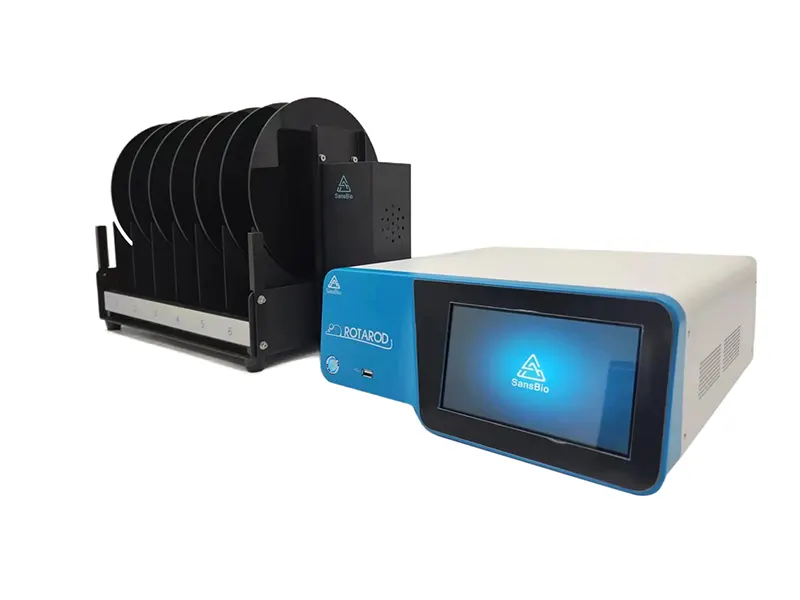
A reliable testing system should support accurate control and repeatable experimental conditions. Researchers should evaluate equipment functions based on their specific study requirements rather than focusing only on basic rotation capability.
Speed accuracy is essential because unstable rotation conditions may introduce unnecessary variation. Multi-lane designs can improve efficiency by allowing researchers to test multiple animals simultaneously and compare different experimental groups.
Automated data recording is another important feature. It can reduce manual recording errors and simplify data management during repeated experiments. Compatibility with both mouse and rat models also provides greater flexibility for laboratories conducting different research projects.
When selecting a rotarod apparatus, researchers should consider whether the system can support precise parameter adjustment, reliable data collection, and efficient experimental workflows.
Enhance Motor Function Research with Reliable Solutions
Rotarod test results depend on careful protocol design, including animal selection, rotation parameters, training procedures, and endpoint definitions. By controlling these variables, researchers can improve the consistency of motor performance data and obtain more meaningful experimental conclusions.
With expertise in life science instruments and software development, BioMed Easy provides solutions for animal behavior, neuroscience, pharmacology, and related research applications. Its rotarod systems support controlled motor function testing for research institutions, universities, CROs, and pharmaceutical organizations. Through reliable equipment and optimized experimental protocols, researchers can improve study efficiency and advance motor performance analysis.
