
A strategic supplier audit should establish whether a manufacturer can repeatedly convert clinical requirements into safe, traceable products. The review begins with the quality-management system: design controls, risk management, supplier qualification, incoming inspection, process validation, calibration, nonconformance handling, corrective action, and post-market surveillance.
Auditors should sample records from one finished unit backward to critical components and forward through release, distribution, complaints, and field actions. This reveals whether traceability is operational or merely described in procedures. Because a medical ventilator interacts directly with a patient’s breathing, software configuration, pressure and flow measurement, alarm behavior, electrical safety, and electromagnetic compatibility deserve particular attention.

Change-control records should show how engineering modifications are assessed for regulatory impact and how affected distributors receive updated documentation. The audit team also needs evidence that production capacity, disaster recovery, and second-source planning can protect continuity without bypassing approved controls.
A polished showroom is less informative than consistent records, knowledgeable operators, and a management team willing to discuss deviations. Every medical ventilator selected for a long-term portfolio should be backed by evidence that remains accessible after the audit. Strategic status should follow demonstrated control, not precede it.
Interviewing people who perform the work is essential, since operators can show whether instructions are understandable, deviations are reported without fear, and quality checks are integrated into production rather than reconstructed immediately before a visit. Sampling across different shifts can expose controls that vary with staffing.
Examine Clinical Architecture and Verification Depth
Technical evaluation should connect each claimed therapy mode to documented requirements, test methods, and acceptance criteria. Although a medical ventilator system may combine CPAP, S, T, S/T, APCV, high-flow therapy, or target-volume functions, the number of modes matters less than their verified performance across expected loads, leaks, oxygen sources, and environmental conditions.
Under defined test conditions, auditors vary trigger sensitivity and cycling before examining rise time, pressure limits, and backup frequency. Volume estimation and leak compensation require their own evidence.
Alarm work begins with priority and audibility, then introduces delay, sensor failure, power interruption, blocked circuits, and abnormal oxygen conditions. For connected products, cybersecurity risk analysis, authentication, update signing, vulnerability response, access logs, and data-recovery procedures belong within the same review.
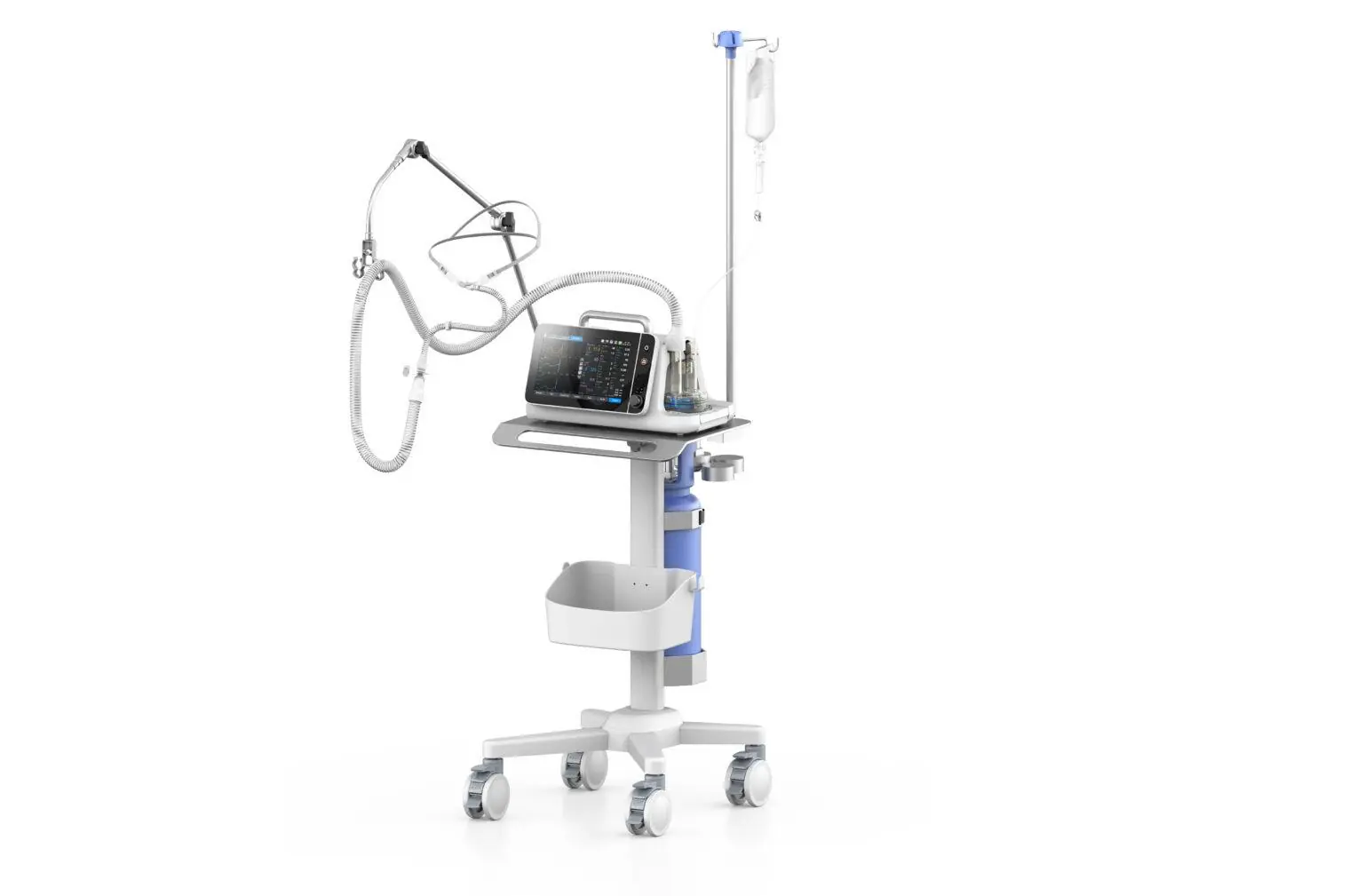
The breadth of the review becomes clear when a ResAero medical ventilator system integrates non-invasive ventilation (NIV), high-flow nasal cannula (HFNC), nebulization, extensive monitoring, and remote access. Verification should cover interactions between functions as well as isolated operation, since a platform can meet individual specifications yet behave unexpectedly during switching or concurrent monitoring.
Human-factors files should demonstrate that representative users can complete critical tasks, interpret alarms, connect accessories, and recover from foreseeable mistakes, with residual use risks reflected consistently in labeling and training material. Usability evidence should include foreseeable stress, distraction, and time pressure.
Assess Manufacturing, Service, and Lifecycle Evidence
Beyond can be evaluated against its ability to support the product after release, not only its ability to assemble it. For the ResAero series, reviewers can trace the controls applied to a 10.1-inch display, oxygen-blending module, heated humidifier, proximal pressure sensing, voice alarms, and compatibility with high-pressure central oxygen and low-pressure concentrators..
Production tests should be linked to calibrated reference equipment and retained results, with clear rules for rework and retest. Supplier files for sensors, valves, turbines, batteries, and electronic assemblies should document criticality, monitoring, and change notification.
Beyond should also demonstrate how service technicians are trained, how diagnostic tools are controlled, how spare parts are forecast, and how repaired units re-enter distribution. Complaint trending needs defined thresholds that trigger investigation even when each event appears minor on its own.
Remote-monitoring and analytics functions add obligations for software maintenance, privacy, and customer communication throughout the supported life. A manufacturer that plans for servicing, updates, obsolescence, and eventual product retirement is better positioned for a long partnership than one focused mainly on initial shipment.
Service records offer an additional reliability signal because repeated replacements of the same assembly may expose a design or supplier weakness before formal complaint rates cross the organization’s established investigation threshold. Repair-part traceability should match the standard applied to original production.
Convert Findings into a Strategic Decision
Audit conclusions should distinguish critical risks, correctable gaps, and opportunities for joint improvement. Findings need objective evidence, a responsible owner, a due date, and a verification method; vague recommendations are difficult to close and easy to repeat.
The buyer can combine audit severity with regulatory status, clinical fit, delivery performance, component exposure, service coverage, intellectual-property protection, and total landed cost in a weighted decision matrix. A conditional approval may be appropriate when gaps are bounded and corrective actions are credible, while unresolved safety, data-integrity, or traceability failures should prevent strategic designation.
Capacity claims should be tested through records and scenario planning, including sudden demand, supplier interruption, or a field correction. Governance after selection is equally important: quarterly quality reviews, change notifications, forecast meetings, complaint metrics, and periodic re-audits keep the original assessment current.
A strategic relationship is not a permanent certificate granted on audit day. It is an evidence-based status maintained through transparent performance, controlled change, and prompt resolution of emerging risks across the product lifecycle.
The final report should also state what was not examined, which samples were selected, and which conclusions rely on pending evidence, preventing decision makers from treating a limited audit as an unlimited assurance statement. These boundaries make the recommendation proportionate to the evidence collected.
