
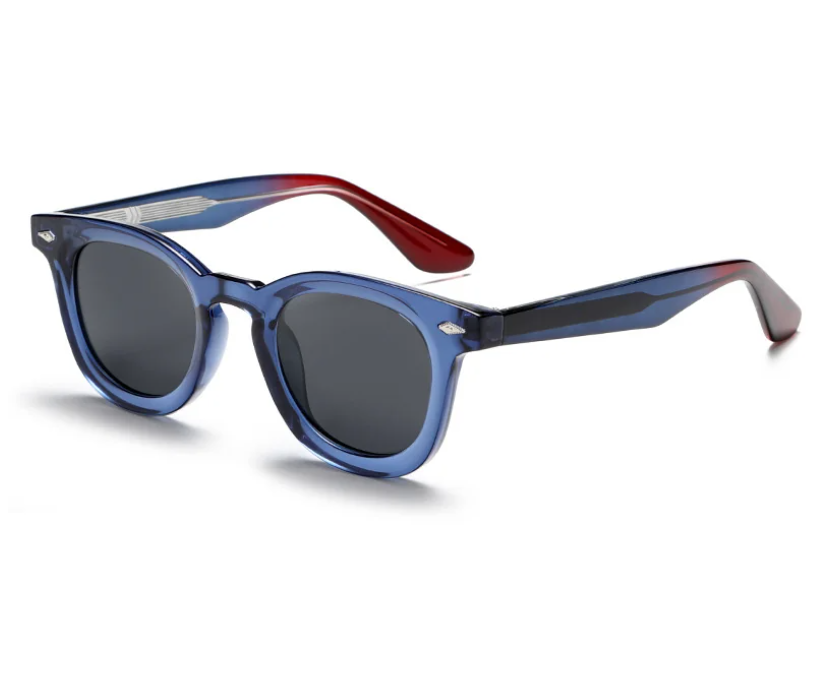
A procurement team requesting a quotation for plastic sunglasses in bulk quickly encounters a reality that separates experienced buyers from first-time sourcing attempts. The per-unit price on a supplier’s offer letter is not a single fixed point; it is the condensed outcome of material choices, production techniques, certification depth, and order structure. Buyers who can discuss these underlying variables directly with a factory shift the negotiation from price haggling to joint specification review, uncovering adjustment points that affect cost without compromising the product’s commercial viability.
Material Identity and Its Built-In Cost Profile
The plastic that forms a sunglass frame carries its own manufacturing cost profile before any design work begins. Injection-molded polymers such as polycarbonate and TR90 cycle through automated lines at high speed, with each mold opening producing a near-finished frame that requires minimal surface refinement. This process yields consistent per-unit economics suited to volume programs, putting these materials in an accessible pricing tier. Acetate sits at the opposite end of the spectrum. It starts as layered cellulose sheets that demand cutting, tumbling, and hand-polishing through multiple stages, with the labor hours and material loss rates both pushing the production cost higher. A buyer who presents a target retail price point without specifying material preference will receive quotes that may span a wide range for reasons entirely unrelated to supplier margin. Asking factories to quote the same frame geometry in both an injected and an acetate version, and then comparing the cost gap, isolates the material contribution and clarifies whether a supplier’s pricing aligns with the actual production route they intend to use.
Lens Specifications and Testing Commitments

Lens choices add the next layer of quantifiable cost, and negotiation room often hides where buyers treat all lens upgrades as interchangeable. Polarized lenses involve a separate film-lamination process and carry a unit-cost adder that factories pass through transparently when the buyer specifies the lens material, thickness, and polarization efficiency target. UV400 protection should function as a baseline, not a premium feature, provided the supplier maintains in-house spectrophotometer verification. The negotiable element is not whether UV400 is listed on a specification sheet but whether the factory includes per-batch test documentation as part of the standard quality package or charges it as an extra service. Similarly, coating durability confirmed through adhesion testing and hinge endurance verified through repeated cycling represent quality commitments that have production-floor costs. A supplier that embeds this testing into their routine workflow may quote a slightly higher unit figure than one that tests only upon request. Presenting two quotes side by side without asking both factories to confirm their inclusion of these verification procedures can make the lower-priced option appear cheaper while carrying compliance exposure the buyer will absorb later.
Order Configuration and Volume Spread
The relationship between order size and unit price follows a pattern that most buyers intuitively understand, yet the way volume is structured often provides more pricing flexibility than a simple quantity increase. Setup activities—mold preparation, line configuration, material batch changeover—consume fixed time that the factory spreads across the entire order, so larger runs reduce the per-unit allocation of these costs. A buyer who commits to a seasonal program with scheduled releases, rather than placing a single ad-hoc purchase order, can unlock the stepped pricing of a higher volume bracket even when each individual delivery remains modest. The structure of the order within the total quantity matters as well. Factories often allocate separate setup windows when a buyer splits volume across multiple colorways, adding incremental cost that can be avoided by adjusting the color count per model. Similarly, requesting that a factory quote the same total quantity under a flat per-model allocation versus a model-level mix reveals whether the supplier’s pricing load factors in unnecessary segmentation.
Timing and the Seasonal Factory Calendar
Sunglass production follows an annual rhythm built around fashion market deadlines and summer retail stocking. Factories experience production density peaks in the months preceding major international trade events and the spring buying season. A buyer who can plan sample approval cycles to land production orders during a factory’s transition window between major programs often finds capacity available at more accommodative rates and with shorter lead times. This is not a discount in the conventional sense; it reflects the factory’s internal need to maintain line utilization during periods when their largest accounts are between seasons. Communicating a production timeline early and asking about scheduling flexibility before finalizing a quotation can reveal opportunities that a purely price-focused negotiation would miss.
Logistics and Total Landed Cost Awareness
The unit price on a factory offer leaves out the expenses that accumulate between the production floor and the buyer’s warehouse. Packaging bulk shipments for containerized freight requires different carton engineering than small-parcel dispatch, and a factory that manages export documentation and container loading in-house may bundle these services into the quoted terms rather than leaving them to a third-party forwarder. Frame protection during transit is another cost that looks invisible until it is absent. Factories that have invested in appropriate polybagging, partition inserts, and carton-grade specifications for long-haul shipping prevent the hidden expense of damaged stock that cannot be sold. Buyers negotiating rates for plastic sunglasses in bulk strengthen their position when they ask about packaging standards alongside the per-unit price, ensuring that a quoted saving on frames is not eroded by repackaging costs or damage rates after delivery. JHEYEWEAR’s integrated production of PC and TR90 frames, combined with flexible MOQ structuring and in-house export coordination, offers buyers a concrete example of how factory-direct logistics organization can simplify the total-cost picture during procurement discussions.
The price attached to a bulk plastic sunglass order is a mirror of specification detail. Material identity, lens construction, in-line testing scope, order phasing, production timing, and shipment preparation each contribute measurable cost that a buyer can discuss with a supplier in technical rather than adversarial terms. Approaching the negotiation with these cost drivers mapped out transforms the conversation. Instead of pushing a supplier to lower a number, the buyer works through the menu of variables behind that number, adjusting where margins of flexibility exist while safeguarding the product attributes that matter for the end market. This method does not guarantee that every quote will land at the lowest possible figure, but it does ensure that the price paid reflects a deliberate set of choices rather than an uninformed acceptance of whatever initial offer happened to arrive first.
