
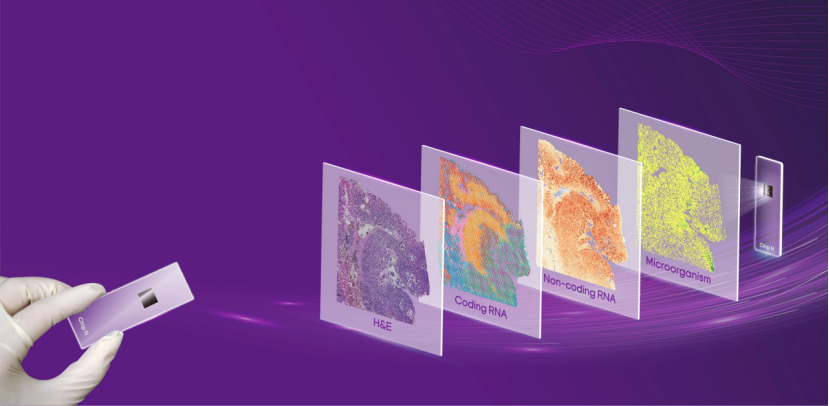
Mastering the technical workflow is only part of the challenge in spatial transcriptomics. The analysis phase presents its own set of hurdles that can compromise results. Researchers leveraging spatial omics platforms must be aware of these common analytical pitfalls. STOmics provides integrated solutions that help address some of these inherent challenges in data interpretation.
Overlooking Tissue Morphology Context
A frequent mistake is treating spatial transcriptomics data without sufficient regard for the tissue structure itself. The power of spatial omics lies in correlating gene expression with histological features. Analyzing expression data in isolation, without integrating image-based morphology, strips away the core advantage of the technology. Successful studies always anchor molecular findings to the visual tissue landscape.
Inadequate Data Normalization Strategies

Applying normalization methods designed for single-cell RNA-seq can be misleading for spatial transcriptomics datasets. Spatial data often contains unique artifacts, such as variations in tissue permeability or capture efficiency across a slide. Using inappropriate normalization can obscure true biological signals or create false spatial patterns. It is crucial to employ methods specifically validated for spatial omics data structures.
Misinterpreting Spatial Autocorrelation
A fundamental aspect of spatial omics is that nearby spots are more likely to share similar expression profiles. This spatial autocorrelation can be mistaken for a strong, biologically relevant cluster. Failing to account for this inherent spatial dependency can lead to overconfident conclusions about distinct cellular niches or expression gradients. Proper statistical modeling must separate true signal from this expected spatial correlation.
Successful spatial transcriptomics requires a careful, informed approach to data analysis that respects the unique properties of spatial data. By anticipating these common issues—integrating morphology, applying correct normalization, and accounting for spatial dependencies—researchers can derive more reliable insights. Platforms like STOmics, which couple wet-lab tools with purpose-built bioinformatics such as SAW, offer a cohesive framework to support robust analysis and help scientists avoid these critical pitfalls in spatial omics research.
